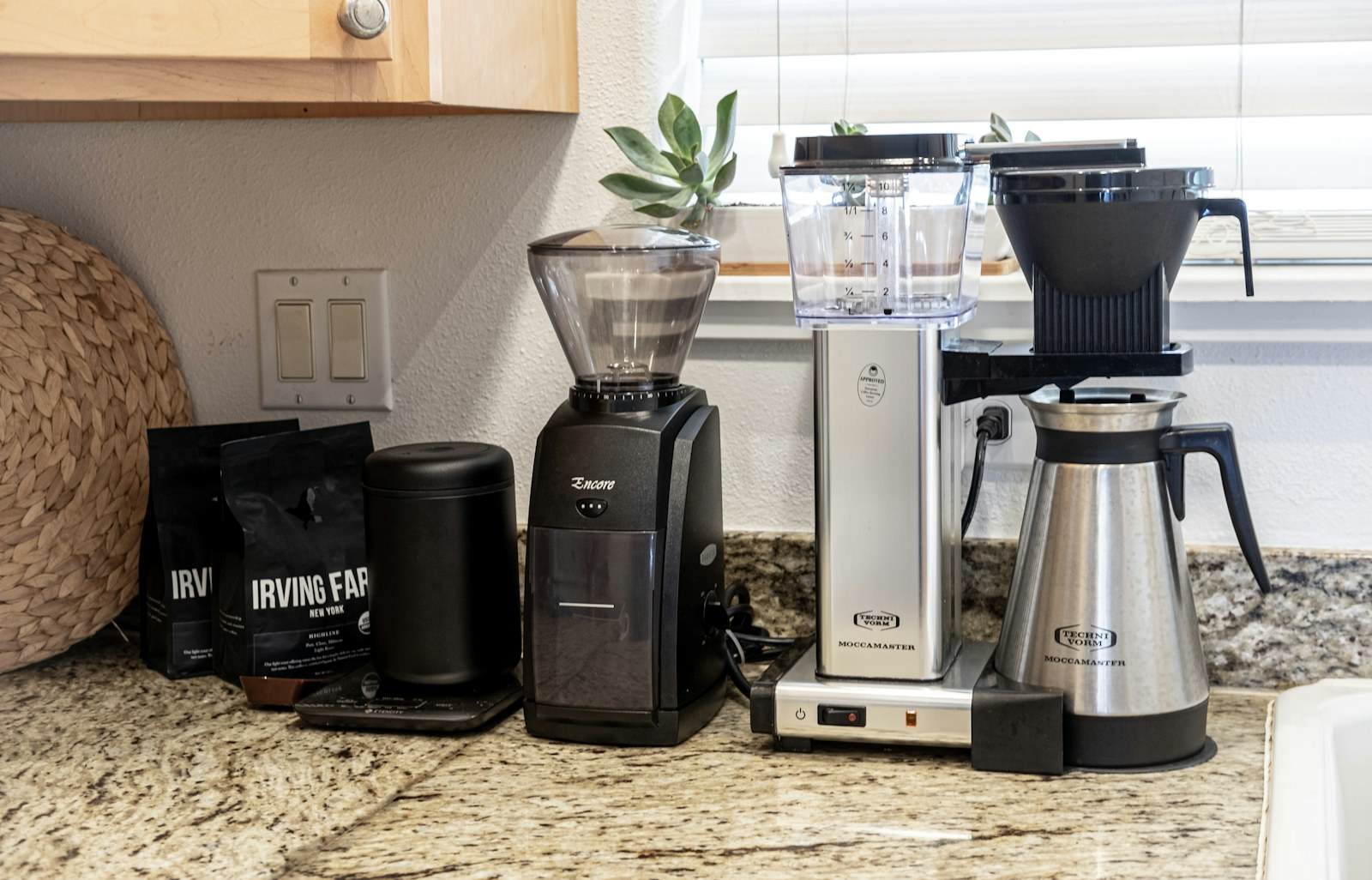
The right coffee makers should make an ordinary part of the day feel simpler. The wrong one becomes an expensive reminder that a product can look convincing in a listing while missing the one detail that matters in your home. This guide approaches the decision from the practical side: who will use it, where it will live, and what will still feel workable after the first week.
The most useful starting point is a real scene rather than a vague product category. Picture a bright kitchen counter during a relaxed morning coffee routine for busy households that want a simple, repeatable morning routine. Does the setup need to fit a tight footprint, tolerate frequent use, stay quiet, move between rooms, or be easy for more than one person to operate? Those questions narrow the field faster than an unfiltered list of bestsellers.
Below, we explain the tradeoffs behind three common buying directions and show what to verify before ordering. We do not assign a numeric score without a documented testing method, and we avoid treating a manufacturer specification as a firsthand performance result. Use this as a shortlist-building framework, then confirm current details with the seller and manufacturer.
Key takeaways
The short version
- Start with brew volume, warm-holding, setup time, cleaning, and whether you prefer convenience or more control before comparing brands or discounts.
- Match the size, capacity, and controls to the reader scenario, not the largest specification available.
- Do not upgrade simply because a product has more features; premium options should remove a recurring frustration.
- Treat published specifications as a starting point and verify current compatibility, price, and return terms before purchase.
Start with the real-life job
For busy households that want a simple, repeatable morning routine, the best coffee makers is the one that fits naturally into repeatable routines. A product that takes an extra setup step may be fine once a month, but that same step becomes friction when it is part of every morning or every meal. Write down the two or three tasks you expect to perform most often, then eliminate options that cannot handle them comfortably.
The setting matters just as much as the task. In a bright kitchen counter during a relaxed morning coffee routine, you may be balancing floor or counter space, noise, storage, outlet access, and how often another person will use the item. Measure the actual area rather than estimating it, and keep doors, drawers, walkways, and ventilation in the plan. A technically capable product can still be the wrong purchase when it crowds the life around it.
It also helps to separate a must-have from a habit you hope to develop. Buy for the routine you can repeat this month, not an idealized version of yourself. If you are changing a well-established habit, choose the simplest credible option first; you can upgrade later with specific evidence about what you need.
- Write down the main task and how often it happens.
- Measure the available space before checking dimensions.
- Name one compromise you can live with and one you cannot.
The details that shape ownership
Once the basic job is clear, compare brew volume across products. This is where a feature list becomes useful: it tells you what may change the experience in daily use. For example, capacity can affect how often you run a cycle, while controls and adjustment range can determine who else in the household is comfortable using the product.
Next, examine warm-holding. A short demonstration or a strong first impression says little about cleaning, storage, updates, filter replacement, charging, or the effort required to put something away. Look for manuals, replacement-part availability, and clear maintenance instructions. A better ownership routine is often worth more than an extra feature that receives little use.
Finally, consider setup time. This is not a reason to buy the most expensive model. It is a reason to read the fine print, confirm what is included, and decide whether the item can adapt if your needs change slightly. Standard connectors, common accessories, and understandable controls usually age better than proprietary systems with little support.
Where specifications overlap, resist manufacturing certainty from small differences. A wider range, higher number, or shorter claim may not translate into a meaningful advantage in your routine. Prefer the option whose core performance is clear and whose limitations are honestly explained.
What to buy, and what to skip
A balanced model is usually the right first shortlist item when you want the category's core benefits without paying for every possible upgrade. Look for the features tied to brew volume, a setup that fits the intended space, and a support path you can verify. The goal is not a perfect specification sheet; it is a product that does the main job without creating a new chore.
Choose a space-conscious design when the surrounding environment is the hard constraint. Smaller does not automatically mean lower quality, but it usually comes with a tradeoff in capacity, speed, battery life, or flexibility. Decide which one of those limitations matters least in your actual routine.
An upgrade makes sense only when you can name the recurring problem it solves. If you expect frequent use and setup time has been a problem before, paying more may be justified. Otherwise, resist the temptation: complex machines with features that do not match how you actually drink coffee. That warning is often the fastest way to protect the budget.
Before checkout, verify the package contents, current compatibility, warranty terms, and return window. Prices and availability change, and a detail that was accurate in an older article may no longer apply. Use retailer links to confirm the live listing rather than relying on a cached summary.
A strong buying decision is not the one with the most features. It is the one you can explain in terms of your own routine, constraints, and acceptable tradeoffs.
A simple shortlist method
Create three candidate groups: a balanced everyday option, a compact or simpler option, and one upgrade with a clearly defined benefit. This prevents the common mistake of comparing products from different value tiers as if they should offer the same experience. The balanced group answers whether the basics are strong enough; the compact group tests whether a constraint changes the recommendation; the upgrade group asks whether a premium feature earns its cost.
For each candidate, confirm only the facts that affect the decision. Check dimensions, power or compatibility requirements, included parts, care instructions, and the seller's return policy. Read recent official support documentation when a feature depends on an app, subscription, accessory, or firmware update. Do not invent a performance difference from a number alone.
Then compare the candidates side by side using your own priorities. If two options are close, choose the one that is easier to use, clean, store, or get support for. Those details are less exciting than headline features, but they decide how satisfied you are likely to be after the novelty wears off.
- Pick one balanced option, one constraint-led option, and one justified upgrade.
- Verify specifications against the current manufacturer page.
- Compare live prices only after the shortlist is complete.
How to verify before you buy
Retail listings can change quickly. Confirm the exact model or configuration, current availability, included accessories, shipping terms, and return conditions directly with the seller. If the purchase depends on a room measurement or another product, measure twice and keep a small margin for cords, airflow, doors, and normal movement.
For safety, compatibility, or health-related claims, use the manufacturer instructions and guidance from a qualified professional rather than a marketing summary. This is particularly important for electrical products, children's items, pet products, recovery tools, and anything installed near water, heat, or permanent fixtures.
Finally, preserve the receipt and packaging until you have used the product in the intended routine. A short trial period is more informative than a perfect unboxing. If it does not fit the way you expected, return it promptly rather than trying to build a routine around a predictable frustration.
Scenario-led shortlist
Three buying directions to compare
These are decision frameworks, not fabricated product tests. Use the labels to match a direction to your needs, then verify current specifications and offers with the seller.
Balanced coffee makers for most households
A sensible first shortlist for a reader who needs coffee makers to work well in daily life, not just look impressive in a specification table. Start here when brew volume matters and you want fewer compromises.
Best for
- Buyers setting up bright kitchen counter during a relaxed morning coffee routine
- People who value an easy ownership routine
- Shoppers comparing several mainstream options
Look for
- Reasonable balance of brew volume
- Straightforward controls and upkeep
- A design that suits the intended room or routine
- Replacement parts and support worth checking
Space-conscious choice for coffee makers
This direction makes sense when warm-holding is a fixed constraint. It prioritizes a calmer fit and simpler storage, which can matter more than one premium feature over several years.
Best for
- busy households that want a simple, repeatable morning routine
- Homes where bright kitchen counter during a relaxed morning coffee routine has limited usable space
- Buyers who prefer a simpler setup and cleanup routine
Look for
- Compact dimensions or flexible placement
- Clear guidance for warm-holding
- Fewer features that require constant attention
- Parts and accessories that are easy to source
Upgrade option for frequent coffee makers use
Consider this tier only when you expect to use coffee makers often and setup time is worth paying for. The goal is not to chase the longest feature list; it is to reduce a recurring frustration.
Best for
- Frequent users with a clear recurring need
- Households replacing an item that came up short
- Buyers who have already compared the basics
Look for
- More adjustment or control where it is useful
- Durability details that support regular use
- A support and warranty path that can be verified
- Compatibility with the way the product will actually be used
Common questions
FAQ: Best Coffee Makers for Busy Morning Routines
What should I compare first when shopping for coffee makers?
Start with brew volume, warm-holding, setup time, cleaning, and whether you prefer convenience or more control. Those details reveal whether a product fits your routine before brand, finish, or small feature differences enter the decision.
Who should avoid premium coffee makers?
Be cautious about upgrading when you will not use the added capability. In particular, complex machines with features that do not match how you actually drink coffee. A simpler option is often the better long-term purchase.
Is a higher price always better for coffee makers?
No. Price can reflect better materials, broader compatibility, stronger support, or simply extra features. Compare brew volume and warm-holding before treating price as proof of quality.
How should I verify a product before buying?
Read the current manufacturer specifications, check the latest retailer listing, confirm the return policy, and look for independent guidance about fit, safety, and long-term ownership. Product details can change, so verify time-sensitive claims at purchase.